Master your craft at home.
Passion can bring us anywhere and nothing compares to the feeling of spending time doing what you love the most.
Autodidact musicians have been present throughout all of music history. We can find our heroes in Van Halen, David Bowie, Franz Zappa or Dave Grohl.
We understand how it feels: You just try to find any moment, even if small, to throw yourself into the strings or keys. Time flies while doing so, you just can’t get enough. The feeling of playing along with that song you love so much or being able to write your own feels really amazing. Also, we have more resources than ever to pursue our passion at our own pace through online courses, video tutorials, and endless chord charts.
If you want to master your craft, keep reading to learn about our tips for self-taught musicians.

1- SET YOUR GOALS
Goals are made of 1: what you want to achieve and 2: the time you set for it.
The key to the learning process is to break it down into small goals and to check them off the list when accomplished. Some will happen sooner than others. Don’t get us wrong, dream big! Just understand the process and give each exercise, song or practice its value. Better to give small, solid steps than to run for it and have to come back once again to that exercise.
2- CHOOSE ONE RESOURCE….AND STICK TO IT
There are plenty of books and online resources to choose from. So many it can feel overwhelming! Reviews can be for sure a good indicator. Also, choosing content created by a musician with many years of performing experience (AND teaching experience) . Once your choice is made, STICK to it. It can be tempting to get as much info as possible but also can lead to getting completely lost.
3-KNOW YOUR TUNING
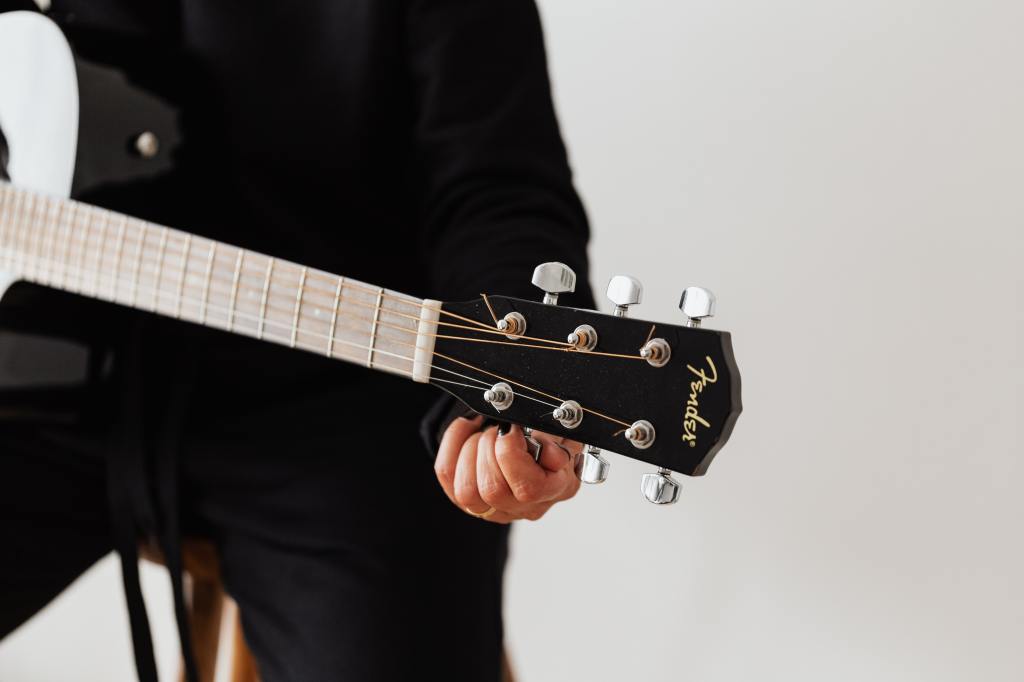
Doesn’t matter how fast, skilled or expressive your playing is…if your instrument is out of tune then there will be very little pleasure in listening to it. Some instruments like acoustic pianos need to be tuned by a professional. But most of them you can do yourself by understanding the mechanics and having a good tool (like an App or a portable/integrated tuner). Like everything else, this also requires practice and ear training, so take it as such.
4- KNOW YOUR BEATS
Same as tuning, your playing won’t be just there if the rhythm is not accurate. We talk not only about learning to play complex rhythmical figures but most importantly to KEEP THE BEAT. To have a sense of unit (or tempo) and rhythmical reference is key to play along with anybody. Rhythmical exercises should be at the top of your list, as well as practicing them with a metronome (again the old school one or just a free download App).
5- BE YOUR OWN TEACHER
Self-teaching involves being able to notice your mistakes and correct them yourself. Video recording or observing yourself in a mirror is key to correct postural mistakes and rhythmical issues. There are so many things we focus on while playing, so it is easy to not be aware of everything all the time.
6 – ANATOMY PLAYS A PART
No two hands are the same (not even your own) so no question in saying that those who preach “this finger should be exactly 2 mm away from the bottom of the second half of the third fret” is not very good teaching. Here is the key: PAIN IS NEVER GOOD. Behind we left (thankfully) the schools that advocated for “with time it will stop hurting” because guess what: it doesn’t. And it is more likely to make you quit than to make you better. Observe your own anatomy, what it feels more comfortable and natural to you. Learn about posture with for example the Alexander technique. And truly do what (literally) feels best.
7 – MUSCLES NEED TRAINING…AND SO THE BRAIN
If you have ever learned a language or trained at the gym, you may be familiar with how it feels when you stop your practice for a while and then go back to it. It certainly feels like you have “un-learned” even when it was already in you. That’s because muscles need repetition to improve and the brain (being plastic and modifiable) does exactly so.
Only you know your availability, but practices that are 2 weeks apart are not going to make you improve much. Set yourself a time at least twice a week, and increase if possible. As said earlier in this text, time (spent) plays directly a part in your goals. More results always equals more practice.

8 – CONSIDER FEEDBACK
Sometimes even taking all of the info and self-analysis one may feel there are obstacles that can’t be overcome. That’s because you don’t know what you don’t know: and that’s ok. If you have taken every measure on your knowledge to sort it out and you still can’t, maybe it’s time to ask for help from a professional teacher.
You don’t have to necessarily start weekly lessons, but to have feedback and guidance on setting your path. So for that, don’t miss our new service of teacher’s feedback and guidance with no commitment to weekly lessons.
Happy playing!
 Music For Your Lessons
Leave a comment